
Civil engineering and structural engineering team at Vector Engineers discussing commercial site development plans, grading and drainage design, stormwater management, and infrastructure coordination for construction projects in the western United States.

What’s New in TIA-222-H

TIA-222-H is the latest version of the Telecom Industry Association standard for the design of antenna-supporting structures.

Vector has been providing structural services in the telecom industry since the company was founded. As a leader in the industry, we have spent considerable time studying the new standard to ensure that we understand and apply it correctly.

Some of the changes in TIA-222-H result in increased loading and detailing requirements leading to heavier, more expensive structures. In most codes, successive editions generally result in increased demands and heavier structures.

However, in this case, a few important changes in TIA-222-H result in reduced loading. We’ll share this good news first and focus on the other changes in a future newsletter.

Telecom structures are usually very optimized with little to no extra capacity built into each design. In a competitive industry like telecom, understanding these changes is critical so that the associated advantages can be realized.

Reduced Wind Speed

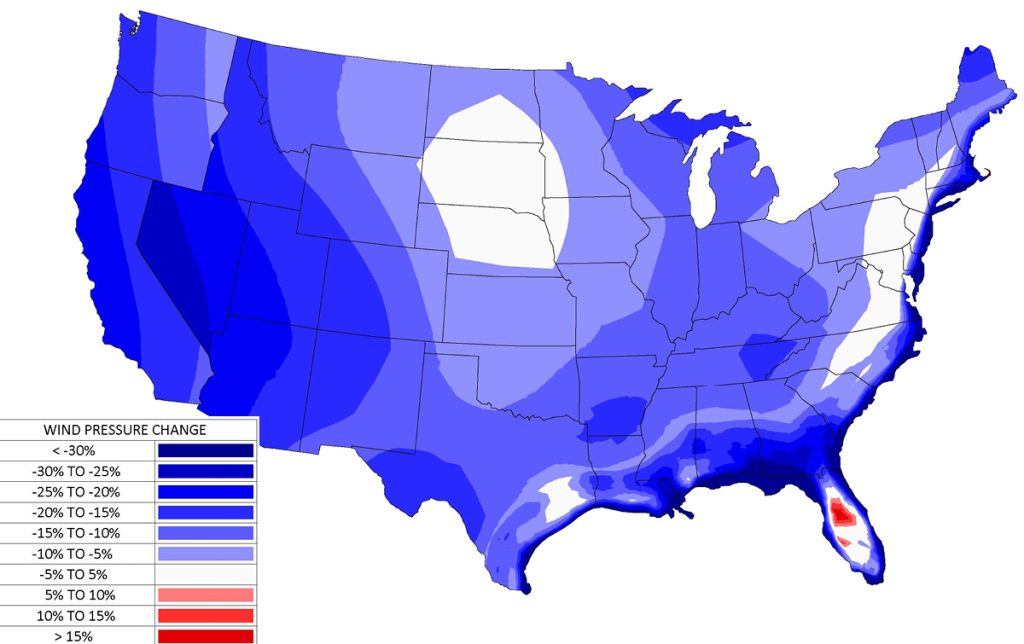
TIA-222-H wind speed requirements are based on the latest meteorological data available to the code- writing committee. As illustrated in Figure 1, in all except a few regions in central Florida, design wind speed has been reduced when compared to the previous standard. Note that because wind pressure is proportional to wind speed squared, a reduction of only a few mph can result in a significant reduction in wind pressure. For example, where the design wind speed changes from 115 mph to 100 mph (13% change), the wind pressure changes by ~24%.
Elevation Factor (Ke)

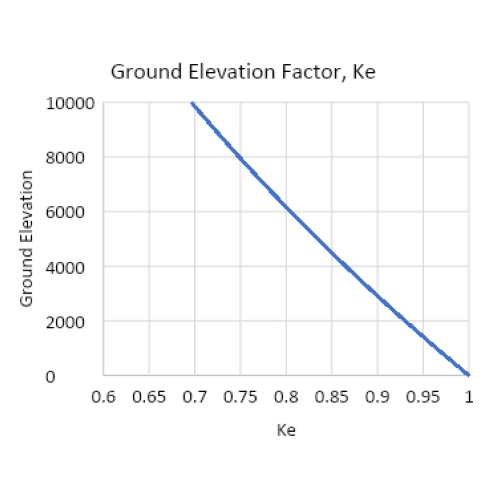
A new factor was introduced to the wind loading equation that results in a reduced wind pressure for sites at high elevation. The factor, as a function of elevation, is illustrated in Figure 2.

The reason for the reduction is quite interesting. At an elevation of, for example, 5000 ft above sea level, the average air pressure is about 83% of the average air pressure at sea level. Lower air pressure = fewer air molecules in a given volume. A 100 mph wind gust at 5000 ft elevation exerts a lower pressure than a 100 mph wind gust at sea level because of the smaller number of air molecules flowing in the gust.
Small Cell Risk Category

Small cell (5G) is the way of the future in telecom, and TIA-222-H is the first edition that makes mention of small cells. The industry norm is to classify nearly all telecom structures as risk category II or higher, but TIA-222-H specifically allows small cells to be classified as risk category I. This classification results in lower wind speed and simpler analysis requirements corresponding to the lower risk to life and property associated with small cell structures.

The Rest of the Story

The list below serves as a sneak preview of a future newsletter in which we will explain some of the other changes in TIA-222-H. Specifically, we will address changes that can result in increased loading, increased detailing requirements, and/or more difficult analysis for structural engineers.

  • Ks factor increases wind pressure for roof-mounted antennas & towers.
  • More stringent requirements for mount analysis.
  • Kd increased to 1.0 for monopoles w/o appurtenances or w/ concealed appurtenances.
  • Equivalent modal analysis no longer allowed for seismic
    design.
  • Overstrength factor introduced for anchor bolts.
  • Baseplates & connections for tubular structures must be designed for a minimum of 50% of the structure’s flexural capacity, regardless of the loading at the connection.
  • Ports in monopoles must be proportioned to match or exceed the section properties of the removed monopole wall material, regardless of the loading at the port section.
  • Exposure D required in coastal hurricane-prone regions.

Stay tuned for our follow-up article where we will describe more code changes, the reasoning behind them, and their effects on our designs.

The engineers at Vector are staying ahead of the game. We know the codes we work with and we would be happy to share our knowledge with the industry. Please reach out to Trevor Hawkes, P.E. (trevor@vectorse.com) with any inquiries.

Contact Us


Civil Engineering Services Now Available at Vector Engineers for Commercial and Residential Site Development

Vector Engineers has built its reputation on responsive structural engineering services for commercial, residential, industrial, solar, telecom, and specialty projects across all 50 states and parts of Canada for over 20 years.

Now, we are expanding our capabilities with the launch of our new Civil Engineering division, providing site development and infrastructure design services throughout the western United States.

For architects, developers, and contractors, this means fewer consultants to manage and better coordination between site and structural design from the beginning of a project.

To lead this expansion, we recently welcomed Morgan Sandberg to the Vector team. Morgan joins us from Keller Associates and brings extensive experience in commercial site development, grading and drainage design, utility coordination, stormwater management, and permitting support.

Our civil engineering services include:

  • Site planning and layout
  • Grading and drainage design
  • Stormwater management
  • Roadway and parking lot design
  • Utility design for water, sewer, and storm systems
  • Coordination with local jurisdictions and permitting agencies

By offering both structural and civil engineering services, we can help clients simplify communication, reduce coordination issues between multiple firms, and keep projects moving more efficiently through design, permitting, and construction.

“If structural engineering focuses on how a building stands, civil engineering focuses on how the entire property functions,” said Morgan. “Before construction even begins, civil engineering helps determine where the building sits on the site, how vehicles access the property, where utilities connect, how drainage is handled, and how the project moves through permitting.”

For contractors and architects, those early site decisions can directly impact project schedules, permitting timelines, construction costs, and long-term functionality.

Civil engineering and structural engineering team at Vector Engineers discussing commercial site development plans, grading and drainage design, stormwater management, and infrastructure coordination for construction projects in the western United States.

Civil engineering helps answer key questions early in the development process:

  • Where should the building sit on the property?
  • How will stormwater and drainage be managed?
  • Where should parking lots and drive aisles be located?
  • How can utilities connect efficiently to city systems?
  • How can the site be designed to meet local requirements while remaining practical to build?
  • How can we use existing topography to create an aesthetically pleasing design, and minimize earthwork?

Our new civil engineering division will primarily support commercial developments throughout the western states, while also assisting residential projects that require site planning, grading, drainage, utility coordination, or permitting support.

"Structural and civil engineering often work hand-in-hand. One designs the structure; the other ensures all plans and designs result in a site that is functional, buildable, and compliant. Bringing both together under one roof creates a much smoother process for our clients and helps reduce unnecessary coordination between multiple firms," Morgan explained.

This integrated approach allows our team to identify issues earlier, improve communication across disciplines, reduce costly revisions, and help projects move from concept to construction with fewer delays.

As Vector continues to grow, our focus remains the same: responsive service, practical engineering solutions, and helping clients solve construction challenges before construction begins.

If you are planning a commercial or residential development project and need coordinated structural and civil engineering services, our team is ready to help.

See Our Locations

info@vectorse.com