Vector Engineers
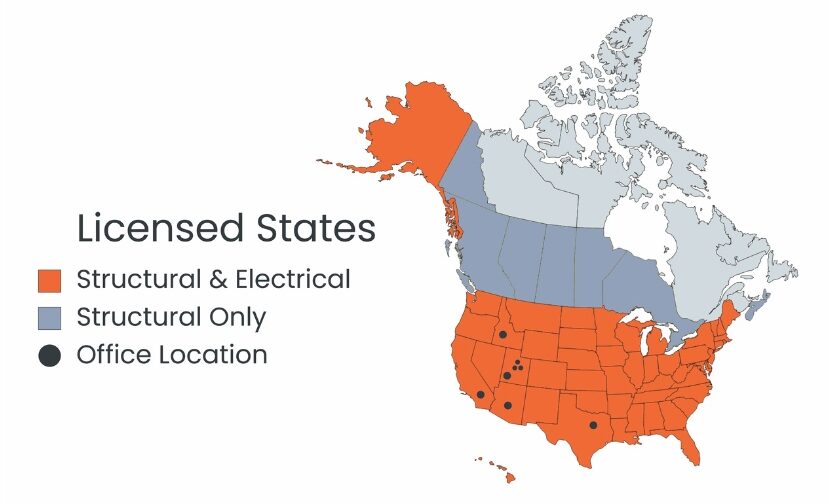
Vector Engineers provides structural and electrical engineering services in all 50 states and most of Canada. We aim to establish lasting relationships with our clients. Our team takes pride in prompt responses, quick turnarounds, and solving our clients’ problems.
Recent Projects
See some of our most recent projects here.
Latest News
Read our latest updates and articles from the Vector Team.
Meet the Team
Get to know your Vector Engineers team.
Questions About a Project?
Need help from a licensed engineer? Call us at (801) 990-1775 and speak with a licensed engineer today.
Or submit this form and a member of our team will contact you directly.
Call For A Free Quote
Licensed In All 50 States, DC, Puerto Rico, and 6 Canadian Provinces/Territories
Stamped Engineering in 1-2 Weeks for Most Non-building Projects, 3-4 Weeks for Most Building Projects
Customer Satisfaction 5-Star Google Rating
Licensed in All 50 States & Canada
Founded in 2002, Vector Engineers is a professional services firm with offices in Utah, California, Idaho, Arizona, and Texas.
Our structural engineering team has more than 500 years of combined engineering design experience, and is supported by complete in-house CAD and administrative teams.
Our structural engineers are licensed in all 50 states plus Washington, D.C., Puerto Rico, and Canada (Alberta, British Columbia, Manitoba, Ontario, Saskatchewan, and Yukon).
Engineering Services
Delegated Design
Connections, stairs, railings, ladders, platforms, ornamental steel structures, store fronts, roof and wall cladding and misc. steel and aluminum projects.
Custom and Tract Homes
High-end and custom homes, tract homes, barns, garages, ADUs, and remodels.
Telecom
Monopoles, monopines and monopalms, top sections, antenna mounts, multi-leg towers, and FRP screenwalls.
Multi-family
Multi-family structures, basements, parking garages, and post-tension concrete slabs-on-grade.
Signs
Billboards, pylon signs, monument signs, ribbons, channel letter signs, scoreboards, centerhungs, and hoists.
Commercial
Office buildings, warehouses, public buildings, tenant improvements (TI), mezzanines, metal building foundations, and temporary bracing/shoring.
Bridges
Pedestrian bridges, vehicular bridges, gangways, box culverts, and abutments.
Electrical
Power and fire alarm systems, security, communication systems, access control, closed circuit television, lighting control systems, electrical consumption reports, and more.
Industrial
Fabric, metal, and hybrid buildings, bulk material handling facilities, processing plants, platforms, silo foundations, pipe racks, fall arrest systems, and greenhouses.
Solar
Residential and commercial, ground mounts, roof mounts, carports, electrical review, product approval, battery mounts, and shade structures.
EV Charging
Wall-mounted systems, podiums, screenwalls, retaining walls, foundations, electrical review, and bollards.
Seismic Anchorage
Anchorage for equipment, cabinets, tanks, racks, and platforms.
And More!
What Our Clients Are Saying
Common Questions About Structural Engineers
What does a structural engineer do?
A structural engineer designs, analyzes, and reviews structures to ensure they are safe, stable, and code-compliant.
When do I need to hire a structural engineer?
Hire a structural engineer when building a new structure, remodeling load-bearing elements, repairing damage, or when required by building codes.
What types of structural problems can a structural engineer fix?
Structural engineers address foundation issues, framing failures, roof problems, seismic concerns, water damage, and load-bearing wall modifications.
How can I verify a structural engineer's qualifications and licensing?
Check state engineering boards for active licenses, confirm professional engineer (PE) credentials, and review experience in similar projects.
What signs indicate I need a structural inspection?
Cracks in walls or foundations, uneven floors, sagging roofs, water intrusion, or difficulty opening doors and windows may indicate structural issues.
How much does it cost to hire a structural engineer?
Costs vary by project size and complexity. Basic inspections may start around a few hundred dollars, while full designs can cost several thousand.
What is the difference between a structural engineer and an architect?
A structural engineer focuses on safety, stability, and load-bearing design. An architect focuses on aesthetics, layout, and usability of the building.
Contact Us
Civil Engineering Services Now Available at Vector Engineers for Commercial and Residential Site Development
Vector Engineers has built its reputation on responsive structural engineering services for commercial, residential, industrial, solar, telecom, and specialty projects across all 50 states and parts of Canada for over 20 years.
Now, we are expanding our capabilities with the launch of our new Civil Engineering division, providing site development and infrastructure design services throughout the western United States.
For architects, developers, and contractors, this means fewer consultants to manage and better coordination between site and structural design from the beginning of a project.
To lead this expansion, we recently welcomed Morgan Sandberg to the Vector team. Morgan joins us from Keller Associates and brings extensive experience in commercial site development, grading and drainage design, utility coordination, stormwater management, and permitting support.
Our civil engineering services include:
- Site planning and layout
- Grading and drainage design
- Stormwater management
- Roadway and parking lot design
- Utility design for water, sewer, and storm systems
- Coordination with local jurisdictions and permitting agencies
By offering both structural and civil engineering services, we can help clients simplify communication, reduce coordination issues between multiple firms, and keep projects moving more efficiently through design, permitting, and construction.
“If structural engineering focuses on how a building stands, civil engineering focuses on how the entire property functions,” said Morgan. “Before construction even begins, civil engineering helps determine where the building sits on the site, how vehicles access the property, where utilities connect, how drainage is handled, and how the project moves through permitting.”
For contractors and architects, those early site decisions can directly impact project schedules, permitting timelines, construction costs, and long-term functionality.
Civil engineering helps answer key questions early in the development process:
- Where should the building sit on the property?
- How will stormwater and drainage be managed?
- Where should parking lots and drive aisles be located?
- How can utilities connect efficiently to city systems?
- How can the site be designed to meet local requirements while remaining practical to build?
- How can we use existing topography to create an aesthetically pleasing design, and minimize earthwork?
Our new civil engineering division will primarily support commercial developments throughout the western states, while also assisting residential projects that require site planning, grading, drainage, utility coordination, or permitting support.
"Structural and civil engineering often work hand-in-hand. One designs the structure; the other ensures all plans and designs result in a site that is functional, buildable, and compliant. Bringing both together under one roof creates a much smoother process for our clients and helps reduce unnecessary coordination between multiple firms," Morgan explained.
This integrated approach allows our team to identify issues earlier, improve communication across disciplines, reduce costly revisions, and help projects move from concept to construction with fewer delays.
As Vector continues to grow, our focus remains the same: responsive service, practical engineering solutions, and helping clients solve construction challenges before construction begins.
If you are planning a commercial or residential development project and need coordinated structural and civil engineering services, our team is ready to help.